Nuno Queiroz
Principal Researcher


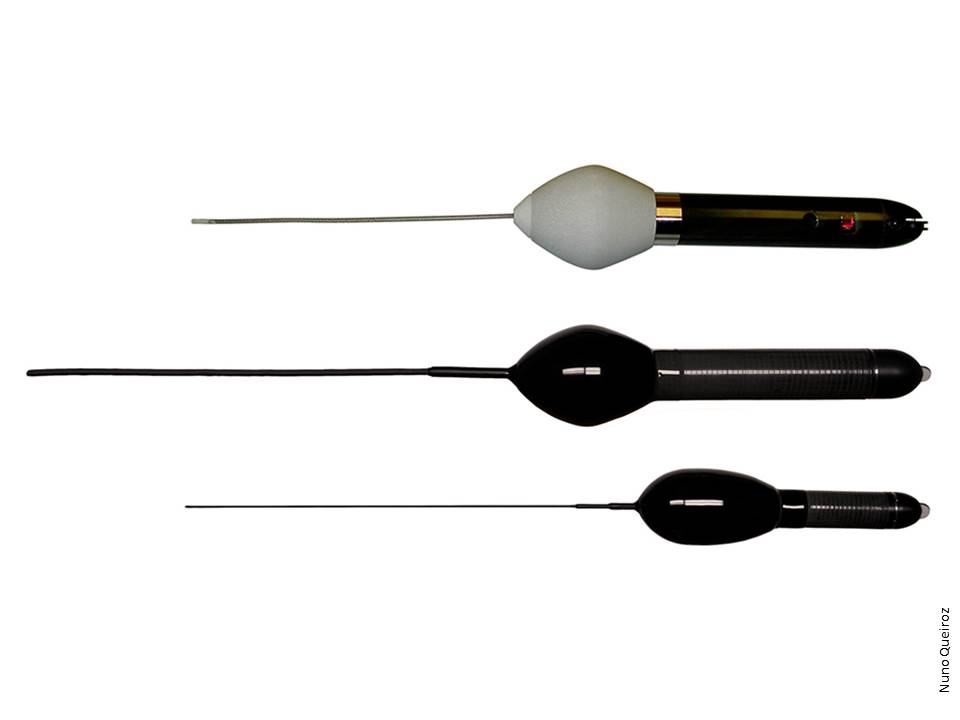
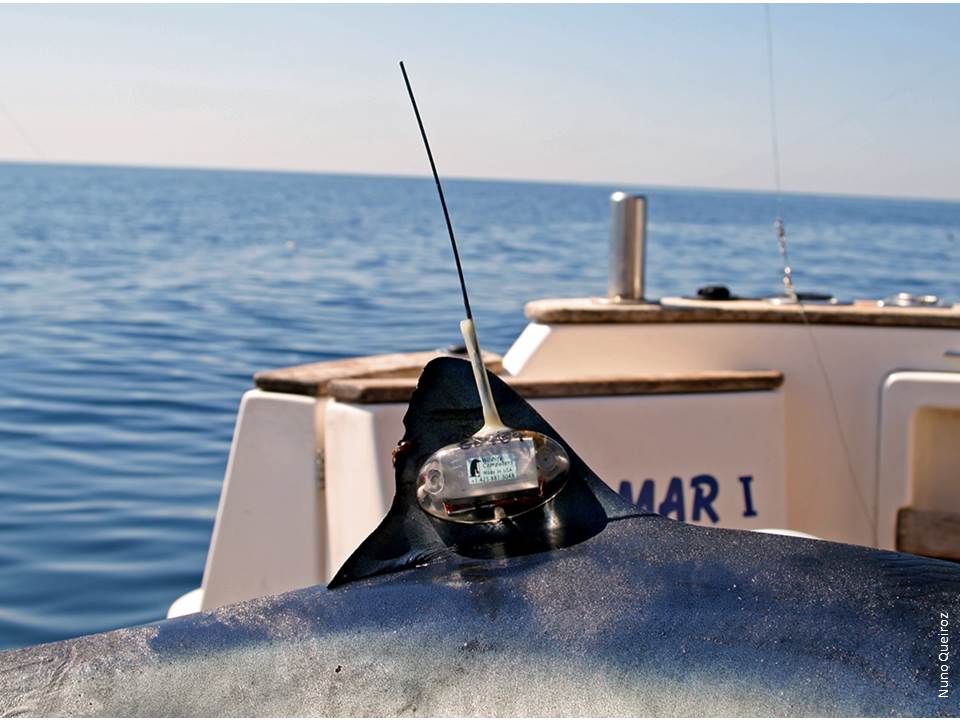
Nuno Queiroz graduated in Biology at the University of Porto in 2001, obtained an MSc degree in Applied Ecology from the same university in 2004, and completed his Ph.D. degree in Biological Science at the University of Aberdeen in 2010. Currently, he works as an independent assistant researcher at CIBIO-InBIO after being recently awarded a 6-year FCT career development grant (ref. CEECIND/02857/2018). He has published >70 papers in ISI indexed journals with over 6000 citations (89.08 citations/paper). A total of 18 manuscripts were published in major multidisciplinary scientific [including Nature (6), Nature Climate Change (1), Nature Ecology and Evolution (1), PNAS (5), and Sci. Rep. (2). Notably, Nuno established collaborations leading to publications with >90 researchers, and currently co-lead the Global Shark Movement Project (GSMP) consortium with prof. David Sims (MBA, UK). The consortium has built a global collaboration of 37 teams, across 100 institutes in 26 countries, collecting satellite tracking data for global analysis of multiple species (with one paper published in Nature 'Global spatial risk assessment of sharks under the footprint of fisheries'). The consortium has links to the MegaMove program, established in 2014 to improve the understanding of marine megafauna movement and enhance the sustainable and effective use of marine resources while conserving biodiversity (with papers published in PNAS 115:3072-3077, 2018; Frontiers in Marine Science 6: 326, 2019 and Frontiers in Marine Science 6: 639, 2019). His h-index is 35. His research focuses on the ecology of predatory fish movements and spatial distributions, the environmental constraints, and the consequences for conservation. His research team has developed methods for maintaining sharks in good condition during tag attachment and for keeping the tags attached for long periods of time. Since 2014 we have successfully tracked >90 sharks and other pelagic fish using satellite tags and high-resolution loggers (triaxial accelerometers). Through a TwinLab initiative between CIBIO-InBIO and the University of Cabo Verde, his team tagged >90 sharks at the ETA OMZ during preliminary trips in 2017/2018/2023. Moreover, in 2019/2020, we successfully built and deployed high-resolution accelerometers together with oxygen sensors to record and study, for the first time, the fine-scale movement of sharks in relation to oxygen and temperature gradients directly (Methods Ecol. Evol. 2024, 15: 1360-1379; Science 2023, 379: 429-433). He has also innovated new approaches to the way movement and environmental big-data are analysed for testing behavioural models that help understand the causes of observed movement patterns. He is also a associate editor for the journal Animal Biotelemetry.